

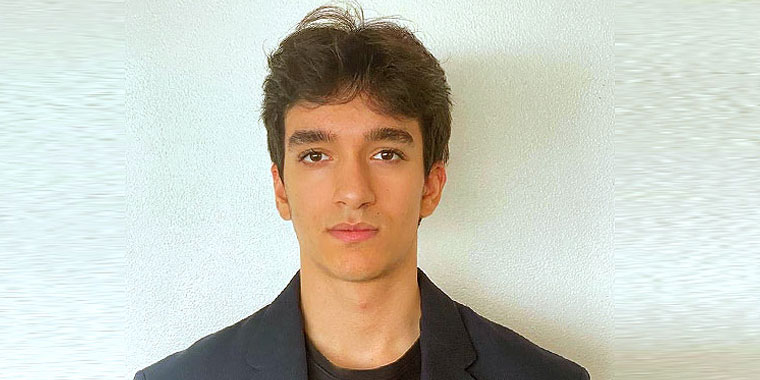
Rayhan Khimji, founder, SNACC, and an international taekwondo athlete, explains the formulation and business challenges of building a clean-label nutrition startup Indian teen athlete nutrition market
I was fifteen when I first tried to build a protein bar.
I had no food science background, no manufacturing contacts, and no reference product — because the product I was trying to build did not exist. The Indian teen athlete nutrition market was entirely untapped. Every bar on pharmacy shelves was built for adults: excessive protein doses, artificial sweeteners, preservatives, and ingredient lists that had no business being near a developing teenager’s gut. For a young athlete training seriously and competing at national level in taekwondo, there was nothing. The market had simply never bothered to build for us — and the few products that claimed to be clean tasted like sandpaper.
That was the gap SNACC was built to close.
The formulation challenge
The hardest problem in building SNACC wasn’t the business. It was the bar itself.
The fundamental challenge of clean-label protein formulation is a trade-off that nobody warns you about: taste and quality pull in opposite directions. Most protein bars in the Indian market that prioritised clean ingredients sacrificed taste entirely — chalky texture, artificial aftertaste, and a denseness that made eating them feel like a punishment. The bars that tasted good were loaded with artificial sweeteners, preservatives, and low-grade protein that compromised gut health and hormonal balance in young consumers.
Cracking that trade-off took approximately three to four months of going back and forth with manufacturers — trial after trial, adjustment after adjustment. Every iteration raised a new question. Too sweet. Wrong texture. Protein ratio off. Shelf life compromised. I was simultaneously learning food science, negotiating with manufacturers, and trying to build something a teenager would actually want to eat rather than force down before training.
The solution came through a combination of ingredient decisions. I replaced artificial sweeteners with dates. I also ensured each bar had natural sweetness with fibre, minerals, and digestive benefits, with no sucralose or stevia anywhere in the formulation. I added prebiotics to support gut health, particularly relevant for athletes whose digestion directly affects performance and recovery. I added chocolate chips — not for nutrition, but because a product that looks and tastes like a real snack gets eaten consistently, and consistency is what actually creates health outcomes.
Removing preservatives required accepting a shorter shelf life. That trade-off was non-negotiable. We prioritised ingredient integrity over convenience. Every claim SNACC makes about its formulation is backed by FSSAI certification — navigating India’s food licensing and regulatory framework from scratch was its own education, and one I’d recommend every aspiring food entrepreneur take seriously before they launch rather than after.
Building the business from zero
Formulation was only half the challenge. Getting the product to market — with no funding, no industry connections, and no playbook — was equally demanding.
I designed SNACC’s packaging myself. I wanted something teenagers would actually want to be seen carrying — not a clinical supplement bottle. That took iteration and a genuine understanding of how visual identity drives purchase behaviour at the point of sale.
Before a single retail outlet had agreed to stock SNACC, I was cold-emailing exhibition organisers, standing at stalls across Mumbai, and selling directly to consumers. That phase taught me more about customer psychology than any market research could have. I learned what questions people asked, what objections they raised, and what language actually landed. The product improved because of those conversations.
Today SNACC distributes across multiple outlets in Mumbai — 20+ Noble Plus Chemist pharmacies, pediatric clinics, and gyms. We have sold over 12,000 bars across nine exhibitions, and recently launched e-commerce with strong early traction. Four independent pediatricians have formally endorsed the product. Every outlet, every endorsement, and every sale was built without external funding.
What comes next
The immediate priority is institutional distribution — schools, colleges, and sports academies. Pharmacy distribution reaches health-conscious consumers who are already seeking better choices. School distribution reaches teenagers who haven’t yet made that choice. That second group is ultimately the more important intervention.
New flavours are in development. E-commerce is scaling. Geographic expansion beyond Mumbai is on the horizon.
But the longer vision is bigger than SNACC as a product. India has a malnutrition crisis that is most acute among its youth — a generation of teenagers who are simultaneously under-nourished and under-served by a food industry that has never prioritised them. My eventual goal is to sit at the intersection of that problem: to build nutrition infrastructure that makes clean, affordable, genuinely effective food accessible to every Indian teenager — not just the athletes who can find it in a pharmacy, but the millions who can’t. That is a far stretch from where SNACC is today. But it is where this started, and it is where it is going.
The market gap I identified at fifteen was real. The solution I built was imperfect, iterated, and entirely self-funded. And it is only the beginning.
