

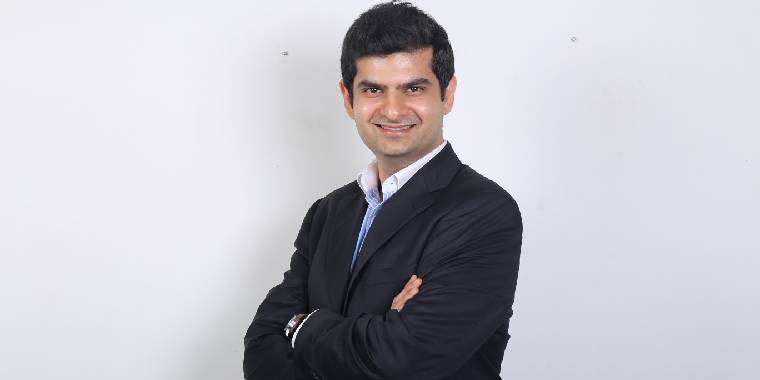
As Kapiva pilots the concept of Kapiva Ayurveda Clinics, founder and CEO Ameve Sharma explains to Viveka Roychowdhury how they are bringing scientific validation back to the forefront, and the demonstrating the positive role herbal medicine can play in healthcare.
Ayurveda was traditionally associated with churans and kadas, while younger consumers today want solutions that are quick, convenient and modern. At the same time, Ayurveda has often been viewed as less scientific than modern medicine. How do you see the renewed interest in Ayurveda after the COVID-19 pandemic playing out for the sector?
I disagree with a few points there. People are not necessarily looking for a “cooler” version of Ayurveda. In healthcare, what people really want is measurable results, safety and clarity. They want to know how long something will take to work and whether it is safe and effective.
Herbal medicine continues to be viewed as a serious medicinal system. In fact, if you look at the startup ecosystem, there are very few startups that have scaled successfully in herbal medicine because customers place a high degree of trust in legacy brands such as Dabur, Himalaya or Baidyanath. Customers still see it as core healthcare.
The strange situation is that India, where herbal medicine originated, has not progressed as much as some other countries. China is a great example. About eight years ago, a Chinese scientist won the Nobel Prize for developing a herbal extract for treating malaria. In China, herbal medicine is a $250 billion market and is fully integrated into mainstream healthcare.
When patients visit hospitals there, they are often prescribed both herbal and allopathic medicines because each has a role to play. For example, if someone has dangerously high blood sugar, they obviously need insulin or metformin immediately. But over time, if herbal supplements are integrated into treatment, they can help improve quality of life and reduce comorbidities.
At Kapiva, we are conducting a double-blind placebo-controlled randomised clinical trial with Manipal Hospital for our diabetes supplement, and we are seeing promising results.
The future of Ayurveda in India lies in integrating it into mainstream medicine. Modern phytochemistry now allows us to identify the active ingredients in herbs and standardise them. Once standardised, they can be clinically validated and safety-tested with the same rigor as modern medicines.
In reality, allopathy and herbal medicine are deeply interconnected. Many of the first allopathic drugs originated from natural sources. Aspirin, for example, came from compounds found in willow bark. Metformin is based on a naturally occurring active ingredient.
There is still a huge lack of information and much of the discussion around Ayurveda is driven by belief rather than scientific proof. Our ambition at Kapiva is to bring scientific validation back to the forefront and demonstrate the positive role herbal medicine can play in healthcare.
You come from the Baidyanath family, which has a long history and legacy in natural medicine. Why did you start Kapiva separately, and how has the journey been over Kapiva’s first decade?
While both companies operate in the same broad category, the thought process and approach are very different.
Baidyanath is primarily a doctor-led organisation focused on classical Ayurvedic medicines prescribed by doctors. Kapiva was built with a different vision — to make herbal medicine measurable, scientifically validated, standardised and safety-focused so that it can become part of mainstream healthcare.
I saw a massive opportunity because traditional medicine accounts for about 15 per cent of healthcare in China, whereas in India it is only around 0.2 to 0.3 per cent. That gap represented the opportunity.
We are now at about a Rs 600 crore net revenue run rate. In FY26, we achieved around Rs 500 crore in revenue and have maintained a CAGR of nearly 70 per cent over the last three years.
We have built strong product categories in diabetes, heart health and herbal gym supplements. Our approach has been very focused — all our hero products go through significant layers of clinical validation. We work directly with hospitals and internal medicine departments rather than CROs because that provides greater credibility.
The next phase for us is definitely global expansion. We want to build in India for the world and demonstrate how herbal medicine can become a standardised mainstream healthcare system globally.
India has enormous innovation potential. We have seen it with organisations like ISRO, where breakthroughs were achieved at a fraction of the cost. I believe India can do something similar in healthcare and take its herbal medicine heritage to the world instead of watching Indian ingredients become popular abroad and then return to India repackaged.
Ten years is really just the beginning. I plan to do this for the rest of my life.
Kapiva is still privately held, are there plans to go public?
At some point, yes, we would consider it. Our investors are very supportive and patient, and they understand our long-term vision. There is no immediate need to go public, but eventually we would consider it.
One criticism of Ayurvedic treatment is that it is often perceived as slow and dependent on lifestyle and dietary changes. How can patient outcomes be improved and accelerated?
One of the advantages of standardising and maximising active ingredients is that Ayurvedic products can become significantly more potent.
Take turmeric and curcumin as an example. If someone simply consumes turmeric powder, the active ingredient content can vary widely, making efficacy inconsistent. Through our supply chain processes and patented extraction techniques, we standardise and maximise active ingredients.
We source herbs from regions with the best geo-indicated quality and then standardize them using phytochemistry and HPLC testing. This enables us to deliver faster, measurable benefits.
The perception that Ayurveda always works slowly comes largely from inconsistent formulations and lack of standardisation.
At the same time, lifestyle and dietary changes do improve outcomes — not just in Ayurveda but in all systems of medicine. Ayurveda’s core philosophy is holistic.
To support this, we conduct nearly 300,000 online consultations every month and are now launching physical clinics for customers who prefer in-person interactions.
For example, customers purchasing a diabetes product receive three free consultations with Ayurvedic doctors who review their medical history, reports and lifestyle before creating personalised plans.
Around 30 per cent of customers avail these consultations, while 70 per cent do not, yet they still see results. However, those who combine treatment with lifestyle changes generally achieve stronger and more sustainable outcomes.
Can you explain how the Kapiva Ayurveda Clinic model works and what the patient journey looks like?
The average online consultation costs around Rs 399, though most are offered free with product purchases.
Our offline clinics are still in the pilot phase. We are setting up three clinics in Bengaluru and evaluating the patient journey and operational model.
Initially, the clinics were intended mainly for our existing customer base, but we are also seeing many new customers walk in.
We are likely to structure the offering as a comprehensive package that combines consultations, lifestyle guidance and products rather than charging separately for each component.
Our philosophy has always been to focus on healthcare outcomes first. Everything else follows from that.
In fact, one of the largest investments in the company has been in R&D. Even consultations were made free initially because we realised customers were more likely to engage if cost was removed as a barrier.
If customers see positive outcomes, they stay with the brand long term.
What kind of policy support does the Ayurvedic and herbal medicine sector need to achieve its global potential?
The government has definitely taken a more proactive approach in recent years, and that is positive.
However, the larger vision of building a globally accepted, scientifically validated herbal medicine ecosystem still needs more momentum. There remains a somewhat traditional view of Ayurveda, whereas we need to reimagine it in the context of modern medicine.
A key requirement is standardisation — ensuring that clinical validation protocols, manufacturing standards and testing processes are globally accepted.
At Kapiva, our clinical protocols and manufacturing standards are already globally aligned, and we are supplying internationally.
One major shift China made was integrating traditional medicine education into allopathic medical courses. Doctors there understand both systems and the science behind them. That closes the gap and encourages informed questions around standardisation and validation.
India needs greater scientific understanding (of Ayurveda, herbal medicine) within the medical community as well.
At Kapiva, every batch undergoes seven different tests, including microbiology, heavy metal, efficacy and active ingredient testing. Customers can access these reports batch by batch.
If this level of transparency becomes an industry-wide standard, consumer trust and safety will improve significantly. But raising the bar will also be challenging for many smaller players.
