

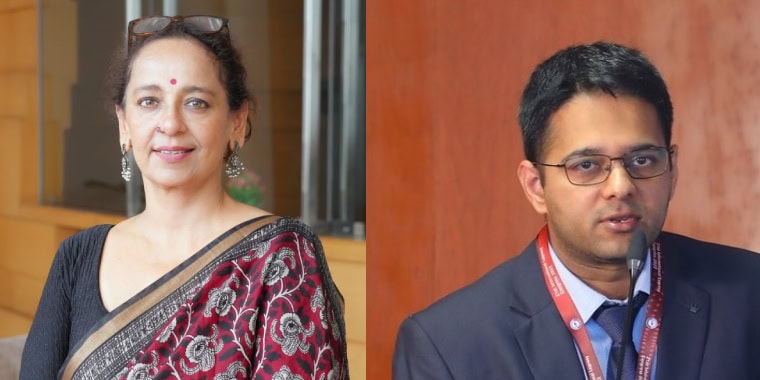
Nikita Sarah, Head – Advocacy & Communications, and Subhojit Goswami, Senior Program Manager – Advocacy & Communications, The Leprosy Mission Trust India, emphasise that just like tuberculosis (TB), the leprosy programme needs to push for nutritional support for patients and their household contacts to reduce the risk of transmission and disability
A research published in the March edition of the Lancet Global Health (1) made an important claim: providing nutritional support intervention could prevent 3,61,200 tuberculosis deaths and 8,80,700 disease episodes from 2023 to 2035. According to Dr Soumya Swaminathan, the Principal Adviser to the National Tuberculosis Elimination Programme and former Chief Scientist at WHO, “nutrition almost acts like a vaccine, and better than the existing BCG vaccine.” Nutrition, according to her, could be an approach in India and other countries where malnutrition is a risk factor for TB. India reports close to 30,00,000 cases of TB each year, which is more than 25 per cent of the global tuberculosis cases every year.
In 2018, the Ministry of Health and Family Welfare (MoH&FW) launched Ni-Kshay Poshan Yojana (NPY) to provide nutritional support to TB patients during their treatment. It turned out to be a good incentive for the at-risk population to report voluntarily and early, because only registered patients are eligible for this monthly financial assistance. In a country like India, where about 40 per cent of TB cases happen due to underlying malnutrition, and early identification of people with active TB is crucial for breaking the chain of disease transmission, this policy decision is a wonder pill!
In October 2024, the MoH&FW doubled the monthly nutrition support under NPY from INR 500 to INR 1,000 per patient for the entire duration of the treatment. It also decided to introduce energy dense nutrition supplementation (EDNS) for all patients with BMI<18.5 and expand the scope of nutritional support to household contacts of TB patients.
Challenges in TB and leprosy: drawing parallels
Just like TB, India reports the highest incidence of leprosy in the world (2), contributing more than 50 per cent of global cases each year. Leprosy is a bacterial infection, which is also the leading cause of disability among communicable diseases. According to studies, “often undiagnosed nutritional deficiencies result in heightened disease severity.” They also suggest that nutrient deficiencies weaken the immune system, leading to a diminished host immune response to pathogens like bacteria. Despite having access to therapy, patients continue to experience poor quality of life in the absence of dietary interventions.
A recent study by The Leprosy Mission Trust India (3) demonstrated that areas having high leprosy prevalence invariably have high levels of nutrition deficits. Seven states in India—Bihar, Chhattisgarh, Jharkhand, Maharashtra, Odisha, Uttar Pradesh and West Bengal— contribute more than 75 per cent of leprosy cases each year and over 50 per cent of child leprosy cases—an indicator of active community transmission of the disease. It is not surprising that these are the same states that contribute more than 50 per cent of India’s TB cases.
Most of these states have high levels of multidimensional poverty—multiple and simultaneous deprivations of health, nutrition, clean water, electricity, livelihood, education, etc. For example, the Ministry of Women and Child Development (4) data suggests that more than 50 per cent of children under 5 years are stunted in the districts of Sitamarhi (Bihar), Bijapur (Chhattisgarh) and Bahraich (Uttar Pradesh). In Maharashtra, the tribal districts of Dhule and Nandurbar have a high percentage of children under 5 years who are wasted and underweight. Leprosy incidences are high in these districts. In short, children and adults in these districts are susceptible to contracting leprosy.
Disease programme integration: win-win for public health
What does the population at risk of contracting leprosy need? A 2022 study (5) published in the National Library of Medicine demonstrated that “supplementation of vitamins A, C, D, E and B12 and minerals zinc, magnesium and selenium in leprosy cohorts, where nutrient deficiency is common, enhance the antioxidant response (a mechanism to protect cells from damage) and decrease morbidity overall”. These supplements strengthen the immune system and mitigate potential adverse effects in leprosy. Reduced leprosy complications will lead to a dip in leprosy-related disability, which, in turn, will reduce economic burden that comes along with it.
We see a great opportunity to extend the coverage of NPY to leprosy patients as well. It will be a disease programme integration in the truest sense. The TB division already has the machinery up and running for providing nutrition support to about 30 lakh patients. The potential benefits of extending this service to around 100,000 leprosy patients and their household contacts are immense. It is now imperative that the MoH&FW act decisively to integrate leprosy patients into the Ni-Kshay Poshan Yojana. Addressing the issue of undernutrition in a synergistic way will not only bring India closer to its TB and leprosy elimination targets but also create a healthier future for millions.
References:
- https://www.thelancet.com/journals/langlo/article/PIIS2214-109X(24)00505-9/fulltext
- https://www.who.int/data/gho/data/indicators/indicator-details/GHO/number-of-new-leprosy-cases
- https://www.leprosymission.in/resources/climate-change/
- https://pib.gov.in/PressReleasePage.aspx?PRID=1806601
- https://pmc.ncbi.nlm.nih.gov/articles/PMC9168857/
