

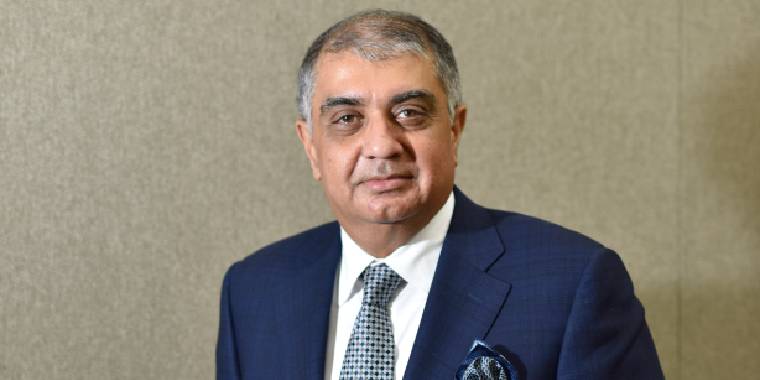
Even though India’s nutraceuticals industry has many inherent advantages, it lacks a cohesive growth strategy. To fix this,Sanjaya Mariwala, Executive Chairman and Managing Director of OmniActive Health Technologies tells Viveka Roychowdhury that we need better regulatory coordination and adherence to internationally accepted standards, more investments to establish scientific substantiation, a complete farm-to-formulation process, increase awareness within the doctor community and build resilience against external supply chain disruptions
India has strong fundamentals in nutraceuticals, yet the sector is still evolving. What are the key structural gaps today, and how can a more data-driven policy approach—such as a comprehensive MoFPI study—help unlock its full potential?
India has a long history of using herbs and botanicals, providing the country with a strong raw material base for the development of our nutraceutical industry. Combined with increasing manufacturing capabilities and advances in science and technology, these strengths can help India to become a global leader in the field of nutraceuticals.
However, currently, the industry lacks a cohesive growth strategy. One of the biggest gaps is the absence of a comprehensive, databacked view of the industry—its size, value chain strengths, export potential, innovation intensity and structural bottlenecks. An indepth study conducted under MoFPI could fill this gap by building a comprehensive picture of the industry and identifying areas where India can build competitive advantages.
How important is regulatory clarity between FSSAI and CDSCO in building industry confidence, and what role do R&D, clinical validation, and global benchmarks like HS codes or a “Nutra Mark” play in strengthening India’s position in international markets?
Since the field of nutraceuticals is an intersection of food, nutrition, and medicine, increased coordination between FSSAI and CDSCO will clarify regulatory procedures, facilitate compliance, and enable firms to invest with confidence in innovation to compete globally.
India’s standing in the world will increasingly depend on scientific substantiation of its products. Those that are clinically proven are more likely to win the trust of regulators, medical professionals, and consumers around the globe. Additional measures include harmonisation of HSN codes, adherence to internationally accepted standards, and introduction of a trustworthy “Nutra Mark.”
At OmniActive, this philosophy has been central to our growth. We invest nearly 10 per cent of our annual outlay in research and development, resulting in a portfolio of more than 127 patents, including 72 granted and 55 pending, 73 clinical studies, and several proprietary delivery technologies. Backed by this strong scientific foundation, our branded ingredients; Lutemax®, Capsimax®, and CurcuWIN®—have gained widespread acceptance among some of the world’s leading nutrition companies.
Another area where we see significant potential is pet nutrition. As companion animal health receives greater attention globally, we have extended our CurcuWIN® technology to develop CurcuWIN® Paws for dog supplements. It is a natural extension of our research capabilities and reflects how clinically validated science can address emerging wellness needs beyond human nutrition. This demonstrates how strong research capabilities can create innovation across both human and companion animal nutrition.
There is increasing focus on building stronger agri-linkages, supporting MSMEs, and developing regional Centres of Excellence. How can these elements come together to create a more resilient, innovation-driven, and inclusive nutraceutical ecosystem?
India’s natural biodiversity and agricultural strength provide a strong foundation for becoming a global nutraceutical powerhouse. However, this advantage can only be realised through better integration between agriculture, industry and research. Strong farm-toindustry linkages improve traceability, ensure consistent quality and create dependable supply chains for botanical ingredients, while enabling farmers to participate in higher-value markets.
But MSMEs need more access to modern technologies, testing facilities, and innovation opportunities. This is where regional Centres of Excellence can help by bringing together research organisations, academia, and the industry players under one roof.
For instance, at OmniActive, our backwards-integration sourcing system allows us to create a complete farm-to-formulation process by working together with the farmers growing marigold and paprika with scientific farming methods. This approach has worked well for farmers and the organisation.
As India moves towards a preventive healthcare model, what role can nutraceuticals realistically play, and how important is their integration into medical education and clinical practice?
It would not be accurate to consider nutraceuticals as alternatives to curative medicines; but these could play an effective role in filling nutritional gaps, ensuring good health and addressing risk factors related to lifestyle and age diseases. In a country like India, which faces problems of micro-nutrient deficiencies and metabolic diseases, prevention through proper nutrition assumes great significance.
In order to ensure that nutraceuticals are used properly as part of healthcare measures, there is a need to bring change in the medical profession alongside industry growth. The knowledge among doctors, dieticians, and other healthcare professionals about the role of nutraceuticals needs to improve.
In the context of the ongoing West Asia crisis and shifting global dynamics, how are supply chains, costs, and exports being impacted—and could this moment also present an opportunity for India to strengthen self-reliance and emerge as a stable global supplier?
The Strait of Hormuz is very important for India in terms of energy security and international trade, therefore any disruption will immediately result in increased transportation, fuel and insurance costs, delays and uncertainties for the exporter. It is clear that this will create additional pressure on costs, commitment of delivery dates and competitiveness.
However, in the case of the healthcare industry the major issue will not be obtaining supplies from West Asia, but the increasing costs and delays in transporting goods along the international trade routes. Situations like these also remind us why it is important to continue strengthening domestic manufacturing, investing in research and innovation, and building supply chains that are less vulnerable to external disruptions. These capabilities will not only make Indian companies more resilient but also reinforce India’s reputation as a dependable supplier to global markets.
[email protected]
[email protected]
